01 / Operation
Tilt + turn clearance
The treatment must stay with the sash when it tilts for ventilation and swings inward for access.
Connecticut · Fairfield County + beyond
Specialist window treatments for European windows that tilt inward and swing open. We review the sash, frame, handle, and clearance first, then recommend the blind or shade system that will keep the window working beautifully.
Send photos, rough dimensions, and your Connecticut town. Fran Ross will help identify the right fit path directly.
01 / Movement
Moves with
the sash
02 / Mounting
No-drill or
permanent
03 / Precision
Measured in
millimeters
04 / Service
Local +
remote CT
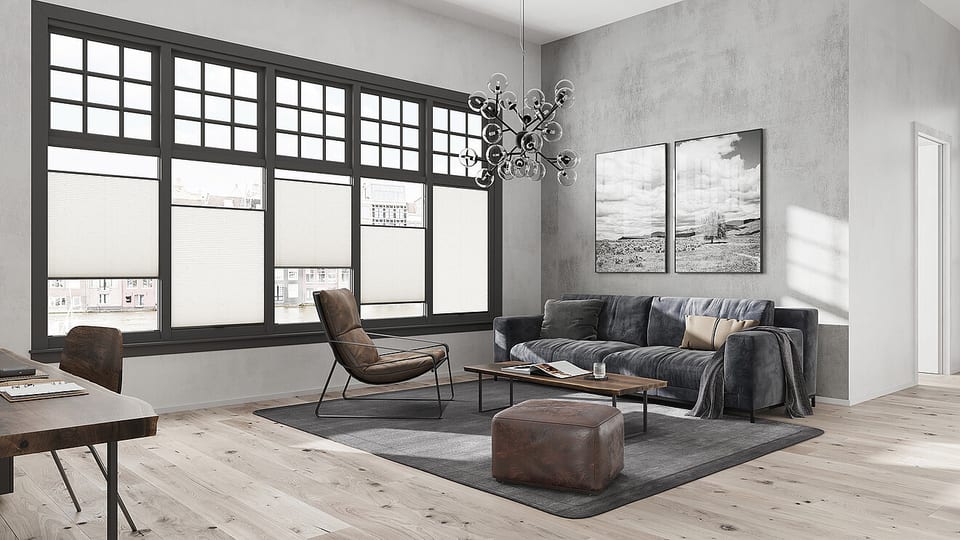
Why Connecticut windows need a specialist
Across Fairfield County and Connecticut’s design-led homes, renovations, and newer condos, European windows are often chosen for performance and clean architecture. Their inward-opening movement creates a very specific shade problem: a conventional inside-mount blind can sit directly in the sash’s path.
Handles, glazing beads, shallow frames, and limited mounting depth make the decision even more exact. A shade that looks fine when the window is closed may bind, twist, or block ventilation as soon as the sash tilts.
Our approach is movement-first. We identify the usable mounting surface, check the handle and glass clearances, understand how the window opens, and only then compare fabrics, opacity, controls, and installation methods.
The Connecticut fit checklist
The same system can be a beautiful fit on one European window and the wrong choice on another. These are the questions we answer before recommending a product.
01 / Operation
The treatment must stay with the sash when it tilts for ventilation and swings inward for access.
02 / Geometry
Narrow frames and glazing beads determine which profiles, clips, or mounting surfaces are realistic.
03 / Hardware
A handle that sits in the shade path can change the system, fabric, rail, or attachment method.
04 / Performance
Sheer, solar, privacy, insulation, and blackout needs all affect the best shade category.
Which system fits?
Pleated blinds and honeycomb shades are often the first systems we review for inward-opening windows because their tensioned construction can stay close to the sash. Rollers, Venetians, and purpose-built Romans can also be right when the window geometry and design brief support them.
The right question is not “Which product is best?” It is “Which product clears this window in every position and gives the room the performance it needs?”
| System | Best for | Why it works | Review first |
|---|---|---|---|
| Pleated blinds | Slim profile and flexible light control | Tensioned rails, broad fabric direction, bottom-up / top-down positioning | Frame depth and handle clearance |
| Honeycomb shades | Insulation, soft daylight, bedrooms | Cellular construction with selected privacy and blackout fabrics | Cell depth, fabric weight, and size |
| Roller shades | Minimal fabric plane and solar control | Clean visual line with solar, sheer, privacy, or blackout options | Roll diameter, casing, and sash path |
| Venetian blinds | Adjustable glare control | Slat angle changes the light while the system stays with the sash | Weight, rail profile, and movement |
| Roman shades | A softer, decorative textile direction | Purpose-built systems can bring tailored fabric to compatible openings | Stack height, depth, and handle position |
A clear local process
A Connecticut project can begin remotely. That makes it easier to identify the right system before scheduling a visit, ordering samples, or committing to a mounting method.
Send straight-on, side-angle, and handle photos with rough width, height, depth, and town.
We map the movement, hardware, mounting surface, shade category, fabric direction, and light goal.
Choose local measurement and installation when available, or establish a remote delivery plan.
Connecticut service area
Local conversations often begin in Greenwich, Stamford, Darien, New Canaan, Westport, Fairfield, Wilton, and nearby towns where renovations and newer homes bring European window systems into the project.
We also work with Connecticut homeowners, architects, and designers outside Fairfield County through a remote fit review. If you are unsure whether your town is in the local installation corridor, send the window photos first and we will outline the practical options.
Connecticut fit questions
For many Connecticut windows, a frame-mounted pleated blind is the most adaptable choice because it stays aligned with the sash and suits narrow frames. Honeycomb shades are strong when insulation or blackout matters; roller and Venetian systems can work when the frame, handle, and clearance support them. The final recommendation depends on the actual window.
Often. Compatible systems may use frame clips, adhesive strips, or bonded plates, while permanent screw-mounted or glazing-bead-mounted methods are available when they are the better fit. Sustainable Shades chooses the attachment after checking the frame material, mounting surface, handle, shade size, and sash movement.
Sustainable Shades offers local measuring and installation options across Fairfield County, including Greenwich, Stamford, Darien, New Canaan, Westport, and nearby communities. Availability and the best service path are confirmed during the fit review.
Send one straight-on photo, one side-angle photo showing depth, approximate width and height, and a close-up of the handle or glazing bead. Include the Connecticut town and whether the priority is privacy, glare control, insulation, blackout, or no-drill installation.
Yes. Sustainable Shades reviews Schüco-style, Internorm, and other European window conditions by looking at the actual profile, glazing bead, handle projection, and opening movement rather than relying on the brand name alone.
Yes. Connecticut clients can begin with a remote fit review, and local measuring or installation can be discussed based on the town, project scope, and available service path. Custom shades can also ship nationwide when a remote workflow is the right choice.
Continue the research
Full system comparison, fit limits, and operating details.
Visual references for pleated, honeycomb, roller, and Venetian directions.
Learn when clips, adhesive, or bonded mounting make sense.
Review mounting depth, size, blackout, and specification criteria.
The Sustainable Shades Difference
Homeowners, architects, and designers come to us with beautiful windows that have very little mounting depth, narrow frames, inward movement, or hardware exactly where an ordinary bracket would go. We resolve the fit quietly—with premium European systems, exacting measurement, and a finish that belongs in the room.
Specialist Focus
Tilt & Turn
Built around European windows, narrow frames, shallow mounts, and other hard-to-fit conditions.
Precision Process
Measured in mm
Exact tolerances, clear hardware review, and a recommendation based on how the window actually opens.